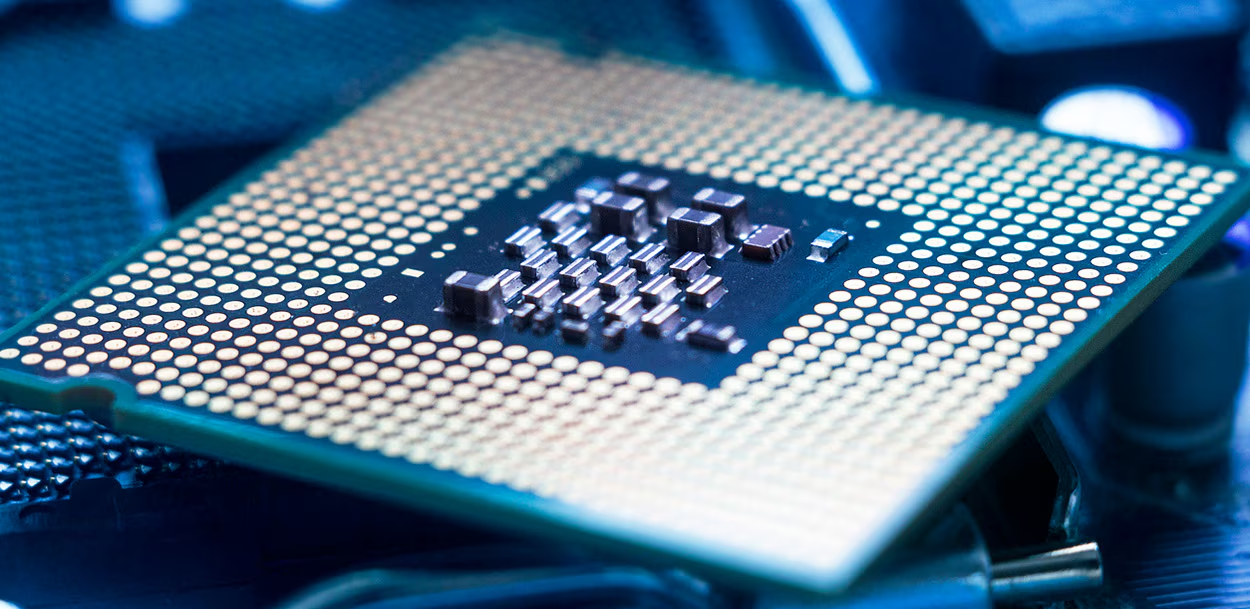
Processors are critical components that determine overall system performance. Their architecture, including core count, clock speed, and cache memory, plays a pivotal role in executing tasks efficiently. Each factor contributes uniquely to a processor’s effectiveness in various computing scenarios. Understanding these elements is essential for evaluating processors and their impact on performance. This analysis raises important questions about the best choices for specific applications and the future of processor technology.
Understanding Processor Architecture
Although many users may be unaware, understanding processor architecture is crucial for evaluating computing performance.
Processor cores serve as the fundamental units of computation, enabling parallel processing capabilities that enhance efficiency.
Additionally, cache memory plays a pivotal role in reducing latency by storing frequently accessed data closer to the cores.
This intricate relationship between cores and cache memory directly influences overall system responsiveness and performance.
See also: How Technology Shapes the Future
Factors Influencing Processor Performance
While various factors can influence processor performance, key elements such as clock speed, number of cores, and thermal design power (TDP) are among the most significant.
Clock speed dictates the number of cycles per second, affecting processing speed. Effective thermal management ensures optimal performance by preventing overheating, thus sustaining clock speeds and enhancing overall efficiency.
These factors collectively determine a processor’s capability in various applications.
Comparing Different Processor Types
When assessing processor performance, it is essential to compare different types of processors, as each is optimized for specific tasks and environments.
Processor generations vary significantly, influencing capabilities and efficiency.
Performance benchmarks provide a quantitative basis for comparison, highlighting differences in speed, power consumption, and multitasking abilities.
Understanding these distinctions allows users to make informed decisions aligned with their specific computational needs.
Choosing the Right Processor for Your Needs
How can one determine the most suitable processor for their specific requirements?
Evaluating processor compatibility with existing hardware is essential, as is analyzing performance benchmarks relevant to intended applications. Users should consider factors such as core count, clock speed, and thermal design power, aligning these specifications with their workload demands.
Ultimately, a tailored approach ensures optimal performance and efficiency in diverse computing scenarios.
Conclusion
In summary, processors serve as the brain of computing systems, orchestrating performance through core count, clock speed, and cache memory. Just as a symphony relies on the harmony of its instruments, a processor’s architecture and specifications determine its ability to handle diverse workloads effectively. Selecting the right processor is akin to choosing the ideal conductor for an orchestra, ensuring that every task is executed with precision and efficiency, ultimately shaping the user experience in today’s technology-driven world.